

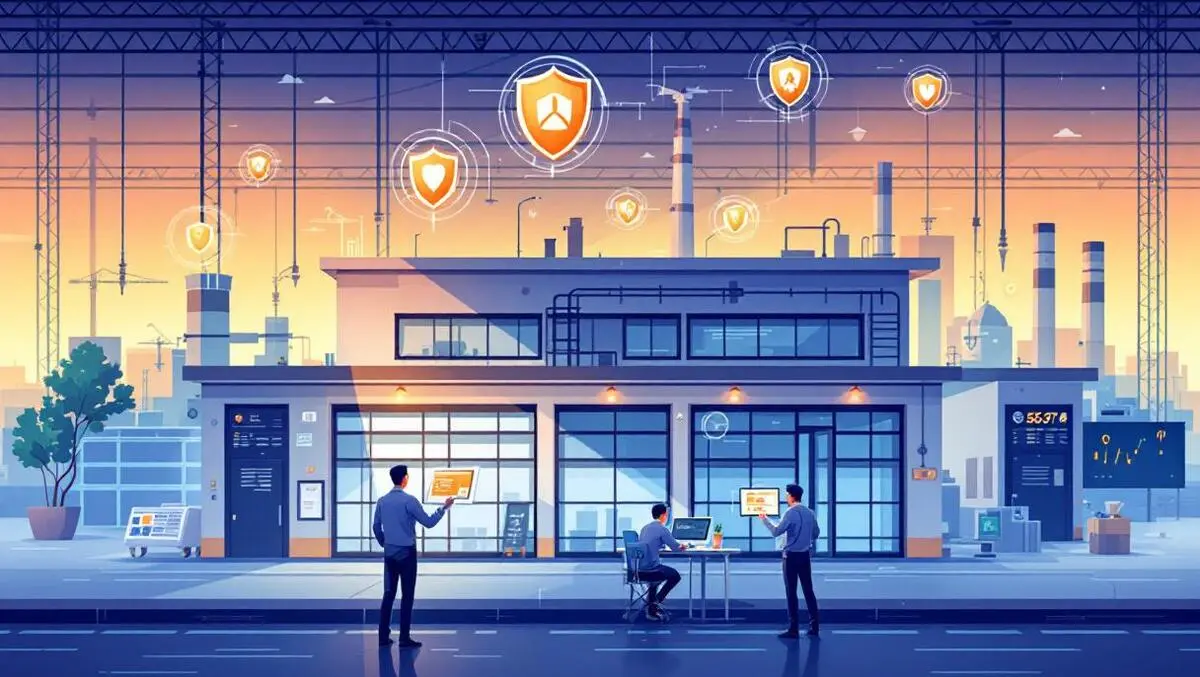
Asia Pacific manufacturers boost focus on cybersecurity threats
Fri, 15th Aug 2025
Manufacturers across the Asia Pacific region are facing heightened cybersecurity risks as operational technology (OT) and information technology (IT) systems become increasingly interconnected.
New findings from Rockwell Automation's 10th annual State of Smart Manufacturing Report reveal that cybersecurity has become a key concern for manufacturing businesses, second only to inflation and economic conditions.
Boardroom priority
Manufacturing businesses are recognising cybersecurity as a strategic issue, not just a technological challenge. The report, which collected feedback from over 1,500 manufacturing leaders in 17 countries, shows that one third of respondents hold direct IT and OT cybersecurity responsibilities.
As companies further integrate OT and IT in their operations, the risk of cyberattacks grows more complex. Many are increasingly turning to artificial intelligence (AI) and machine learning (ML) to address these risks in real time.
"Cybersecurity is no longer just a technology issue - it's a boardroom issue," said Stephen Ford, Vice President and Chief Information Security Officer at Rockwell Automation. "As IT and OT become more connected, the attack surface is expanding. Our latest research confirms what we're seeing firsthand: Cyber risk is now one of the top threats to manufacturing growth. You can't protect tomorrow's enterprise with yesterday's tools. AI is a critical part of the modern security stack, enabling manufacturers to detect threats in real time, maintain productivity, and stay ahead in an increasingly aggressive threat landscape."
Key survey findings
According to the Rockwell Automation survey, cybersecurity (30%) is now seen as one of the two most significant external risks by respondents, just after inflation and economic growth (34%). More than half (61%) of cybersecurity and IT professionals plan to adopt AI or ML-based solutions for security within the next year, 12 percentage points above the broader manufacturing sector.
The report also indicates that 38% of manufacturers intend to leverage data collected from current sources to enhance protection. Additionally, 48% of cybersecurity professionals highlighted the need to secure converging IT and OT architecture within the next five years, compared to an average of 37% among all respondents.
Workforce and skills needs
Talent requirements are also changing as the digital environment evolves. More than half (53%) of respondents from companies with revenues of USD $30 billion or more view cybersecurity practices and standards as extremely important skills, compared with 47% of all respondents. This highlights a growing emphasis on cybersecurity capabilities in workforce development and hiring strategies.
The report acknowledges ongoing challenges in talent development, workplace training, and rising labour costs, all of which continue to affect the competitiveness of manufacturing organisations in the region. As manufacturers seek to hire new talent, cybersecurity and analytical skills are expected to be critical requirements.
"Cybersecurity has become a business enabler," said Ford. "It's no longer just about preventing threats, it's about empowering transformation with confidence. The most forward-thinking manufacturers are proactively leveraging advanced technologies like AI to stay ahead of evolving risks."
Survey methodology
The State of Smart Manufacturing Report analysed responses from 1,560 participants from a range of sectors - including consumer packaged goods, food and beverage, automotive, semiconductor, energy and life sciences. Respondents ranged from management to C-suite roles and represented companies with annual revenues from USD $100 million up to more than USD $30 billion.
The findings reflect the increasing role cybersecurity plays in manufacturing and reflect industry trends towards integration of IT and OT, the growing use of AI, and prioritisation of skills development for future workforce needs.