


The GSMA has published three reports on India's digital economy, arguing that the country must turn its mobile scale into economic growth and stronger digital trust.
India has about 1.2 billion active mobile connections and almost 450 million 5G connections, according to the industry body. The reports focus on AI-ready networks, enterprise digitisation, digital trust and common standards for 6G.
One report, titled India Ecosystem Insight Report: From Mobile Connectivity to Digital Infrastructure, says India's broad connectivity base should support the next stage of economic development. It argues that the country now needs investment conditions that support stronger digital infrastructure, higher business productivity and more trusted digital services.
The study outlines three main priorities. The first is AI-ready networks, which it describes as essential to India's wider ambitions in artificial intelligence. The second is enterprise digitisation, with services such as fixed wireless access, private networks, cloud connectivity, network APIs and cybersecurity presented as tools to help businesses modernise. The third is digital trust, covering secure authentication, fraud prevention and privacy-preserving use of network intelligence.
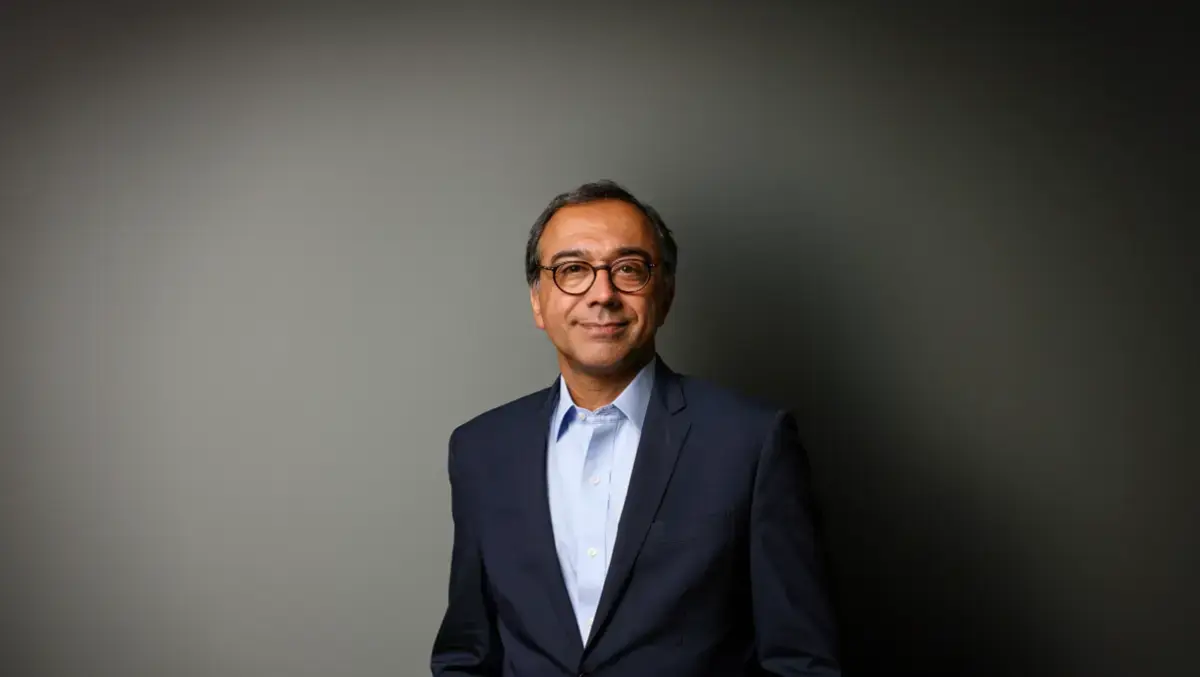
Vivek Badrinath, Director General of the GSMA, linked those themes to the next phase of India's digital development.
"India has demonstrated that it can deliver digital scale. The opportunity now is to turn that scale into innovation, enterprise growth and trusted digital services," said Vivek Badrinath, Director General of the GSMA.
A second report, Digital Nations 2026: Building Trusted Digital Ecosystems in Asia Pacific, assessed 22 countries across infrastructure, innovation, data governance, security and people. It identifies four elements that underpin digital trust: verifiable identities, authentic communications, resilient networks and responsible sharing of trusted information.
The report says India has already made progress in digital infrastructure and security. It argues that the next step is to use that base to encourage greater enterprise adoption, more innovation and wider use of mobile internet services.
Trust and scams
The research also examines trust from a consumer protection perspective. In India Consumer Scam Report 2026: Permission Granted, Cases Still Open, the GSMA says 12% of respondents reported being scammed in the previous year, while 72% said the growing risk of scams had changed their behaviour.
It found that most victims sought help after an incident, but many did not see their cases concluded. Among those surveyed, 86% of victims reported their case to an organisation, yet 33% of reported cases remained unresolved. The report also says 67% of victims who lost money recovered none of it.
Those outcomes appear to affect confidence in how institutions use personal data. The survey found that 88% of respondents whose cases were resolved were comfortable with government use of their data, compared with 64% of those whose cases were still unresolved.
The findings point to a need for faster case resolution, better recovery of lost funds and closer coordination between public authorities, banks, mobile operators and digital platforms. The GSMA also says network APIs could provide another layer of protection.
Indian operators including Airtel, Reliance Jio and Vodafone Idea support GSMA Open Gateway, which provides common technical frameworks for uses such as number verification and SIM swap signals. The organisation is also pursuing additional work on trusted data sharing, network API signals and Open Verifiable Communications through its United Against Scams programme and the Asia Pacific Cross Sector Anti Scam Taskforce.
That taskforce includes 39 organisations in 17 countries, among them Airtel, Reliance Jio and Vodafone Idea. The report presents cross-sector cooperation as necessary because scam cases often span telecoms, banking and digital platforms.
6G standards
The reports also argue that India has an opportunity to shape the development of 6G and its international standards. Across Asia Pacific, operators and industry groups, including the Bharat 6G Alliance, have signed the GSMA's Tokyo Accord, which supports open, interoperable and trusted digital ecosystems for the 6G era.
Badrinath said India's role in standard-setting could extend beyond its domestic market.
"India's next decade will be defined not simply by how many people are connected, but by what they can achieve through that connectivity. Digital trust is not simply a safeguard. It is infrastructure for growth," said Badrinath.
He also linked India's position to broader work on future mobile standards.
"India's global leadership can be manifested through innovation in building 6G, which is to be a truly global standard," said Badrinath.
"Open, interoperable and trusted global standards allow innovation to travel, so people and businesses everywhere can benefit."