

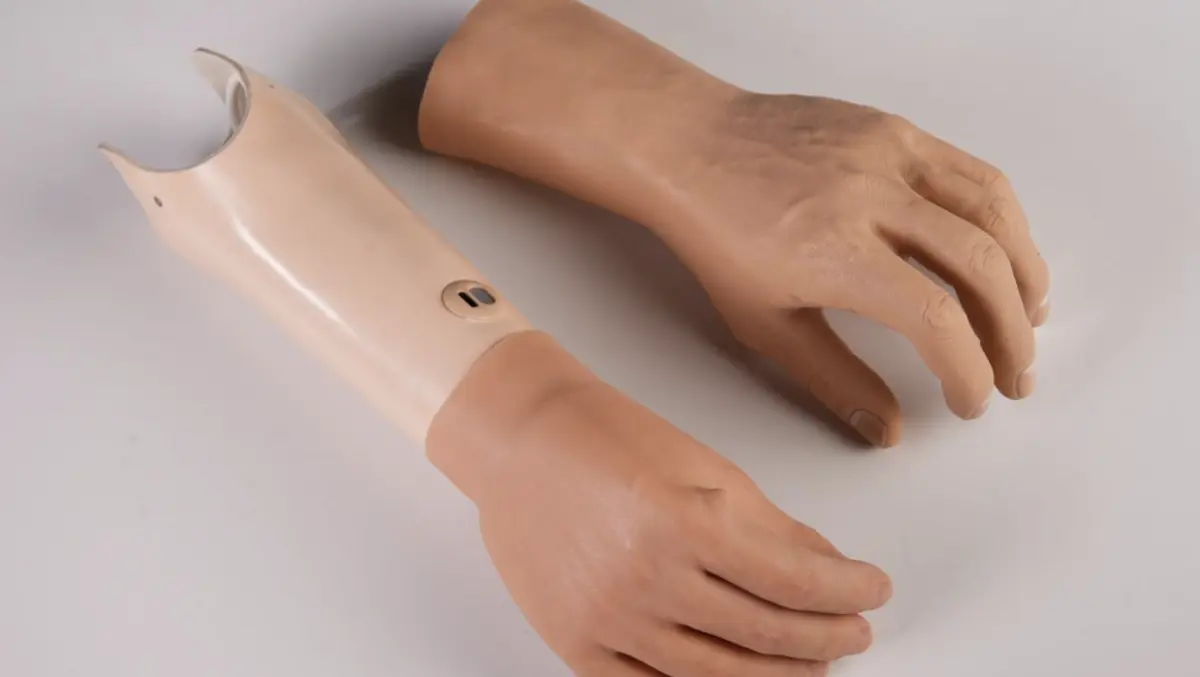
Motorica starts local bionic hand production in India
Wed, 4th Nov 2026 (Yesterday)
Motorica Group has begun local production of its bionic hand prostheses in India, marking the Russian medical technology company's first manufacturing technology transfer outside its home market.
The production unit has been set up at the premises of Motorica's Indian prosthetics partner in Ghaziabad, Uttar Pradesh, and will initially make the Indy Hand myoelectric prosthesis. Motorica specialists trained local staff, established production processes and introduced quality control standards at the site.
Several dozen prostheses have already been made at the facility, with some fitted to users. The Indian site is intended to improve access to the company's products by cutting manufacturing and logistics costs and shortening servicing times.
Motorica has operated in India since 2021 and has built a network of more than 60 partner clinics. It has also worked with Indian universities to train prosthetics professionals and opened an office in New Delhi in early 2025, which now serves as its regional hub for India and Southeast Asia.
The first product to be assembled locally is a single-grip myoelectric forearm prosthesis for people with upper-limb amputations and congenital limb differences. The model supports multiple grip patterns, can lift loads of up to 10kg, has an IP54 ingress protection rating and weighs 520g. An optional rotator allows the hand to detach quickly and rotate 360 degrees.
India market
The launch gives Motorica a manufacturing base in a market where demand for prosthetic and assistive products is high, but access remains limited. The company cited research estimating that about one million people in the region live with amputations, while World Health Organisation figures indicate that only 10% of the population has access to the assistive products they need.
By moving part of its production closer to users, Motorica aims to adapt its engineering to local requirements while keeping core product design and technologies unchanged. It also plans to widen the range of products made in India over time.
Cost savings are expected from using local suppliers for components and reducing cross-border transport costs. Local assembly should also allow clinics and users to receive maintenance and servicing more quickly than under a fully imported model.
India has become an increasingly important overseas market for medical device manufacturers seeking lower production costs and broader reach across Asia. For prosthetics makers, the country also offers a large clinical base and a network of rehabilitation providers that can support fitting, maintenance and follow-up care.
Regional plans
The Indian operation also fits into the company's wider regional plans. Motorica's New Delhi office supports business development in India and expansion into Southeast Asian markets, suggesting the Ghaziabad unit could become a base for broader localisation efforts.
Founded in 2015, the company says it has produced more than 11,000 prostheses for patients in 15 countries. Its portfolio includes upper and lower limb prostheses for adults and children from the age of two.
Motorica has also expanded into leg prostheses through carbon foot models developed with Turkish company IB-ER. Since 2021, it has also conducted research into sensory restoration and phantom pain reduction using stimulation of the peripheral nervous system through implanted electrodes.
Commenting on the India manufacturing launch, Ruslan Babintsev, Chief Executive Officer of Motorica India, linked the project to the company's longer-term presence in the country and its rehabilitation network. "Launching localized manufacturing is a natural next step in Motorica's development in India. Over the past several years, we have built strong partnerships with the clinical community, established a local team, and laid the foundation for long-term growth. Manufacturing in India allows us to respond more quickly to the needs of clinicians and patients while making our prosthetic solutions more accessible across the country. As production grows, we plan to expand the range of products manufactured locally and continue strengthening our rehabilitation network in India and across Southeast Asia."