

The great reskilling myth: How right-sized ERP training cuts consultant fees and empowers your existing team
Mon, 24th Nov 2025
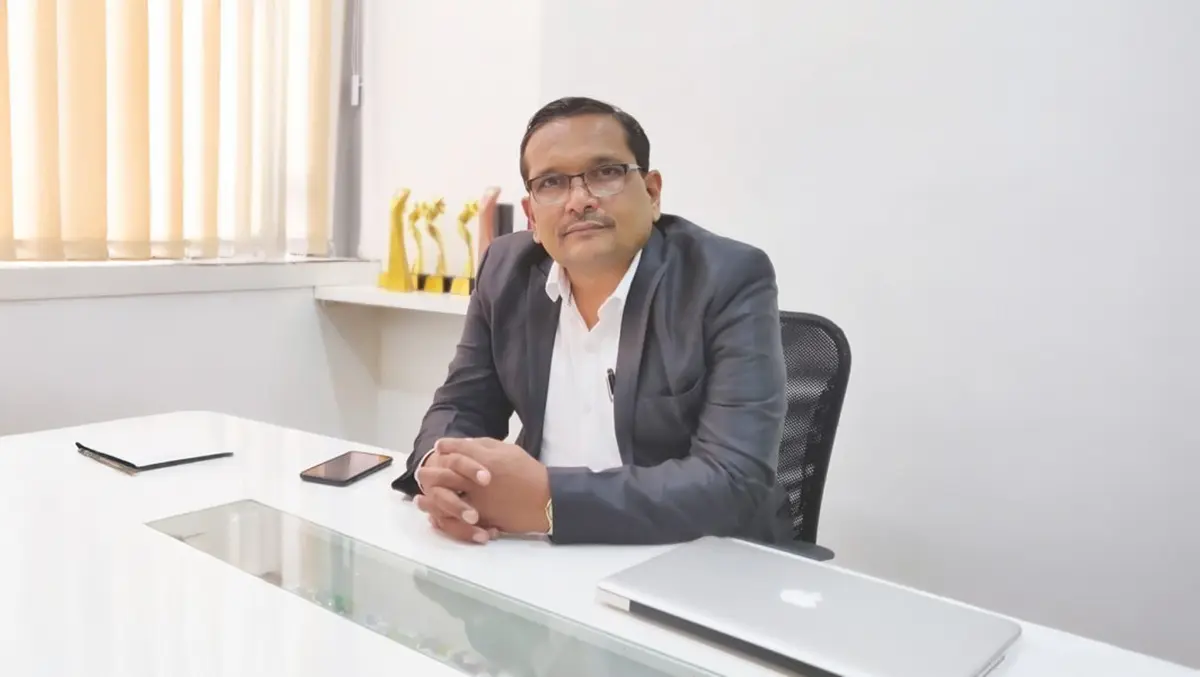
Enterprise Resource Planning (ERP) systems have become the digital nervous system of contemporary businesses. ERP consolidates functions like finance, HR, procurement, supply chain, production, and sales; therefore streamlining businesses while providing leaders with real-time visibility. Yet, even with the transformative nature of an Enterprise Resource Planning system, businesses often fall into the misunderstanding that all employees will need to go through excessive reskilling to use the system. Yet, as Mr Veerendra Jamdade, CEO and Founder of Vritti Solutions, highlights in the article, businesses often mistakenly believe that all employees require excessive reskilling to use the system. This misunderstanding creates higher implementation costs and makes businesses dependent on outside consultants.
Why ERP and the Reskilling Mindset
The belief that we need to build all the skills of using an ERP from scratch is based on the assumption that the ERP is too technical or advanced for the current population to learn. Many leaders fear that their employees will struggle with ERP modules depending on their previous experience or as a result of completing inappropriate course-work. As a result, companies typically engage outside consultants at every phase of the implementation process; commencing configuration through everyday employee inquiries after the go-live phase because they believe that employees will not be capable of learning and managing the ERP without the involvement of a consultant. Continuous engagement of outside consultative services creates increased costs for businesses and employee usage of an unrelated knowledge base. Many organizations do not fully appreciate that ERP is meant to make business functions easier, not harder. Modern ERP platforms are designed to be intuitive, workflow-driven and user-friendly. Employees who already know your company processes, often have the ability to interpret and execute those workflows, sometimes better than an outside resource can. Rather than churning up resources to teach employees everything anew, it is more beneficial for companies and their employees to focus on training for select roles to develop what the employees are already good at!
Right-sized training is the solution to the reskilling fad
Right-sized training in this instance means providing training that meets the organization's needs, the various roles and requirements of the function. The right-sized training is not clunky, expansive modules the teams would be overwhelmed with, but rather what is necessary, such as: finance teams learn the finance modules. Procurement leaders learn the sourcing and buying flow. HR employees master the people management workflows. Employees only learn enough to do their job function. The essence of the training shapes an internal "power user". A power user is someone who was trained on a slightly higher level than the others and becomes an ERP champion in the organization. These power users have enough knowledge of the system, so that they can assist their co-workers, troubleshoot small issues, configure the basics, and align the process. This relieves some dependence on consultants, promotes a culture of self-reliance, and uses the system as intended. Most importantly, the power users become the internal bridge between technology and the business, ensuring the ERP system is adapted to the organization's growth.
The Significance of Internal Sponsors in Achieving ERP Success
Internal sponsors are key to maintaining ERP usage long after the initial launch. They help their team by clarifying flows that can be distracted, answering questions, and ensuring that everyone follows the standard process. This decreases the learning curve and allows teams to feel a sense of ownership. Rather than being an external tool forced, they begin to see ERP as a tool they own and control internally. In addition, power users democratise ERP knowledge throughout the company. When knowledge is not retained by the consultants or IT groups only, there are quicker decisions, smoother operations, and less bottlenecks. The champions even help with training new employees as they help make ERP familiar for incoming people without having to pay for costly trainers. Over time, the company establishes a solid internal ecosystem that can manage upgrades, audits, compliance, and everyday operating issues without external support.
Why Right Sized Training is Even More Important for SMEs
SMEs will benefit the most from right-sized ERP training. While large enterprises have deep pockets and vast ERP teams, SMEs do not. They operate with smaller teams and much less spare cash. Paying a consultant for every configuration, update, and question simply is not sustainable for SMEs. Right-sized training allows SMEs to optimise their costs by enabling their existing workforce to complete many of the tasks associated with the ERP.
Navigating Obstacles and Avoiding Traps
Achieving right-sized training isn't without obstacles. For example, finding acceptable power users will take thoughtful consideration of an employee's bandwidth, motivations, and ability to learn. Likewise, if training is too shallow, internal teams will miss critical nuance in the process, leading to mistakes. On the other hand, if training is too broadly based, it can overwhelm users and undermine their confidence in working with the system.
To navigate these obstacles, organizations should develop a structured training plan that phases the training so that users can digest information at their pace, and also provide continued support from the implementation partner throughout the first months so the training can be reinforced, leading to momentary acquiescence to knowledge before the value of learning fades. Through consistent ongoing training in the form of revisitor programs and knowledge sharing sessions, ERP competence should stabilize and incalculably improve, despite changes in employees and processes.
People, Not Technology, Determine ERP Success
At its core, ERP isn't just software, it's a people-based transformation. The myth of large, reskilling has pushed many organizations to overspend and overcomplicate the ERP journey. In contrast, right sized training, an implementable solution, is a reasonable, sustainable possibility that even companies with inadequate resources can consider to operationalize the impacts of training. Building on existing staff, and activating "internal champions" is an opportunity to control consultancy fees, build internal capacity, and unlock the full potential of an ERP.
For CIOs, CFOs, and other technology stakeholders, let the message be clear; The success or failure of an ERP is not a matter of how many you reskill, but a matter of how strategically you train. Smart, targeted, and based on user roles training will defund the reskilling myth and help build a future-ready organization of informed, confident, and capable teams.