Energy consumption stories
GoNetZero reveals 'René', an AI innovation set to transform business access to energy data for improved decarbonisation decisions.
Verne Global debuts direct liquid cooling technology at its Finnish data centre, enhancing its sustainability pledge.
Seagate has launched the Nytro 4350 NVMe SSD, promising reliable performance and efficient power consumption for data centres.
IT and security leaders are left with the challenging brief of building a secure, innovative IT infrastructure while limiting carbon emissions.
Survey reveals environmental implications of AI, as it could consume up to 3.5% of global electricity by 2030, according to Gartner.
The global tech community is addressing the environmental impact of video traffic on networks, according to Philippe Wetzel, CEO of VITEC.
Gartner sheds light on top 10 strategic tech trends for 2024, highlighting the central role of AI in business growth.
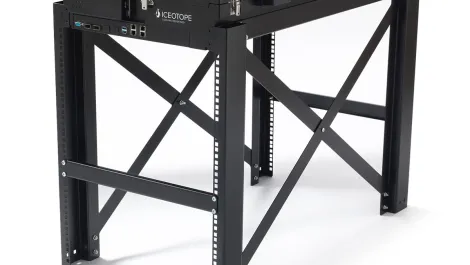
Iceotope and etisalat showcased cutting-edge liquid cooling technology at GITEX GLOBAL in Dubai, promising significant energy reductions for data centres.
Schneider Electric Singapore invests SGD$1.2M in a data center testbed aiming to develop eco-friendly and energy-efficient cooling solutions.
Former Samsung manager Marco Priebe joins PPDS to lead LED growth strategy, aiming to position the company as a global leader in display solutions.
Although ESG challenges can be difficult to quantify, understanding and setting baselines are critical for new goals to be established.
Nutanix predicts that organisations will adapt infrastructure models due to global energy supply issues by 2023.
Singapore lifts moratorium on new data centre projects, but with emphasis on power efficiency and sustainability.
Ben Crowe appointed as Vertiv's vertical sales leader for colocation and hyperscale in Australia and New Zealand.
Vertiv appoints Ben Crowe as the Vertical Sales Leader for colocation and hyperscale businesses in Australia and New Zealand, expanding the local team.
AI-powered Voltaware Sensor debuts in the UK, offering detailed appliance-specific electricity consumption tracking.
Indosat Ooredoo Hutchison has delivered a strong financial performance for 2023, featuring significant year-on-year increases in total revenue and EBITDA.
Homes could cost slightly more to build, but lower energy bills and emissions are expected as Australia lifts its NatHERS bar to seven stars.
The new tool provides users with a report that helps illustrate how infrastructure choices can impact an environmental footprint.
Honeywell has been named the joint facility services provider for Frankston Hospital's AU$1.1 billion redevelopment.










.webp)




.webp)