Workforce Technology stories
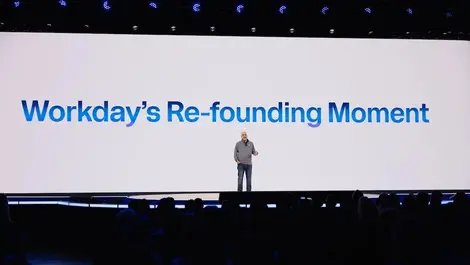
Its AI-first overhaul has cut layers, sped product cycles and left the company betting that startup-style speed can still serve Fortune 500 customers.
AI could soon transform jobs, hospitals and schools, with Talwar warning that bigger firms may lag as security and accountability concerns slow adoption.
The overhaul signals Remote's push to become a central platform for multinational payroll, as demand rises for simpler cross-border workforce administration.
The deal gives Workday a way to tie access controls to hiring and departures, reducing manual oversight as firms deploy AI agents.
Early warnings from routine site data could help cleaning firms intervene before service lapses turn into lost contracts.
The handover gives the HR software group an executive with 30 years' sector experience as AI tools increasingly reshape hiring and workforce planning.
The pilot will link sales, production and logistics data, giving CAS real-time visibility across orders and deliveries as it tests an AI operating layer.
The software group is strengthening its ANZ push as it seeks deeper inroads into government, education and industrial markets.
Multinational employers will be able to manage HR, payroll and compliance in one system as ADP widens its Europe rollout to four headquarters markets.
Access to building records is now being offered to AI assistants, with human sign-off still required for contract changes and variations.
Despite pay rises, 38.8% of European and 37.8% of US permanent data centre staff expect to switch employers within a year.
The enlarged group will serve more than 450 customers and bolster its push into financial services and AI-led customer experience projects.
Heavy workloads are offsetting AI's gains for many UK staff, with 44% of users saying the technology has increased their burden, PwC found.
Some young cancer patients at Starship Hospital have had chemotherapy pushed back by up to seven days as nurse shortages bite.
Worker shortages and weaker finances are threatening New Zealand's ability to deliver future infrastructure projects, a survey found.
Vacancies are draining staff and customers, with employers saying an unfilled critical role costs USD $14,700 a month, a survey found.
The rollout could speed up screening for high-volume roles, with 87% of candidates completing the interview and 95% finding the feedback useful.
Women hold 63.4% of the jobs most exposed to generative AI in UK manufacturing, raising fears the technology could widen workplace inequality.
It aims to reduce safety and audit risks in sectors such as mining and care by showing whether workers are actually cleared for each job.
Australian workers in later careers are far less confident about their finances, as only 9% of 40- to 64-year-olds feel secure about money.