

Australia could become Asia-Pacific AI infrastructure hub
Wed, 26th Aug 2026.webp)
Delta Electronics Australia has published an insights paper arguing that Australia can become an Asia-Pacific hub for AI infrastructure. The paper focuses on the country's potential to act as an "AI anchor" in the region.
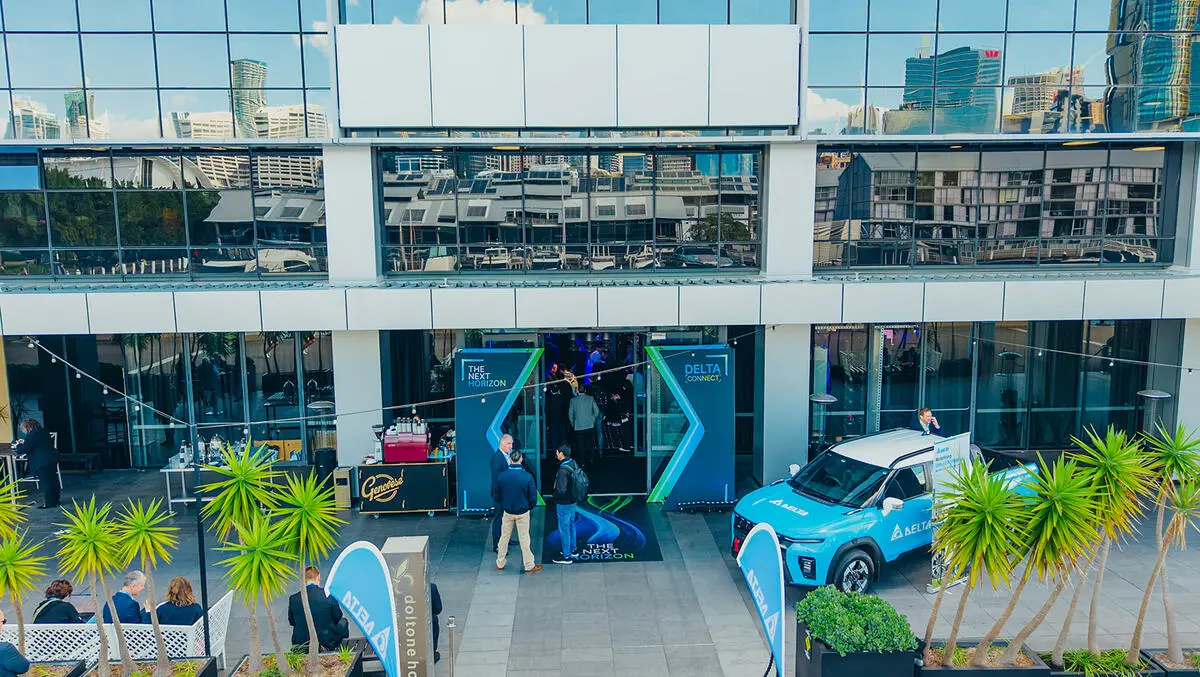
The document draws on discussions at the company's technology summit in Sydney, where executives, advisers and infrastructure specialists examined whether Australia's energy system can support rapid growth in data centres and AI workloads.
At the heart of the argument is a tension between strong investment interest in AI infrastructure and concern about the electricity network needed to support it. A spot survey of 180 summit attendees found that about 80 per cent viewed grid supply as a significant risk to Australia's future growth.
That concern comes as data centre expansion accelerates. According to figures cited in the paper, data centres are projected to account for 6% of Australia's electricity demand by 2030, increasing pressure on generation, transmission and backup systems.
Grid pressure
The paper argues that Australia has several advantages that could attract AI infrastructure investment, including a stable energy grid, growing renewable energy supply, and support from government and hyperscale data centre operators. But it says those strengths will not be enough without broader upgrades to energy resilience and flexibility.
Battery Energy Storage Systems feature heavily in that assessment. The paper presents the technology as one way to manage load fluctuations, ease pressure on the grid, and allow operators to increase rack density more quickly over a data centre's life.
Attention on battery storage also reflects a wider shift in the energy market. Previous heavy investment in gas for combined heat and power is giving way to battery systems backed by renewable generation for backup energy and load smoothing, the paper argues.
As part of the Federal Government's Capacity Investment Scheme, large battery-based infrastructure projects are expected to supply enough electricity for about 3.7 million Australian households in the coming years and deliver AUD $343 million in benefits for local communities and industry, according to figures cited in the document.
Kane Ravenscroft, Co-Founder of Optimal Group, described that shift at the summit as moving energy storage "from periphery to a key component."
Build mismatch
The report also points to practical issues for data centre developers beyond power supply. Panellists identified a mismatch between construction schedules, which can run to about two years, and IT hardware refresh cycles, which can be as short as one year.
That timing gap matters because operators face pressure to bring new AI capacity online quickly while avoiding stranded infrastructure. The paper argues that battery storage can help bridge part of that gap by supporting faster increases in rack capacity and density while helping operators manage changing demand profiles.
Panellists from AirTrunk, Zerra and Delta also highlighted other obstacles for hyperscale developments, including technical, social and regulatory barriers. Energy is a central issue, the paper argues, but not the only one.
Ecosystem view
Petah Marian, Director of Foresight and Strategy at KPMG Futures, argued at the summit that the AI build-out is colliding with several other structural changes in the Australian economy. These include the retirement of older generators and a broad shift towards electrification across industries, goods and services.
The paper argues that these trends mean infrastructure planning cannot happen in silos. Energy, data centres, transmission links and access to critical minerals all need to be developed together if Australia is to capture more of the economic value tied to AI and energy storage.
Marian warned in part about the supply chain, saying Australia cannot "simply import everyone else's intelligence."
Australia's position in battery materials illustrates that risk, according to the paper. It says Australia supplies 49 per cent of the world's hard rock lithium, yet 80 per cent of global lithium-ion battery cells are made in China, leaving the country exposed if it fails to expand local processing and manufacturing.
KPMG Futures estimates cited in the paper suggest Australia could secure AUD $140 billion in new trade by 2040 if it captures even a modest share of global processing. A separate estimate points to AUD $115 billion in annual economic gains by 2030 from the data centre boom through "productivity, output quality, new businesses and jobs".
Community acceptance
The paper also argues that physical AI infrastructure will need stronger community acceptance as data centres move closer to metropolitan areas to reduce latency and support connected urban services. That extends the debate beyond engineering into planning, land use and social consent.
Its authors link that issue to the development of smart cities, where connected systems support transport, services and other civic functions. In that context, the report argues that developers will need to show clearer public value if data centres are to be accepted as part of urban infrastructure rather than as isolated industrial assets.
The broader conclusion is that Australia's AI ambitions depend on coordinated action across government, industry, regulators and communities. In the paper's framing, grid upgrades and battery investment are essential, but will matter most if they sit within a wider industrial strategy that connects energy, digital infrastructure and supply chains.