

Cisco unveils universal quantum switch for mixed systems
Mon, 27th Apr 2026
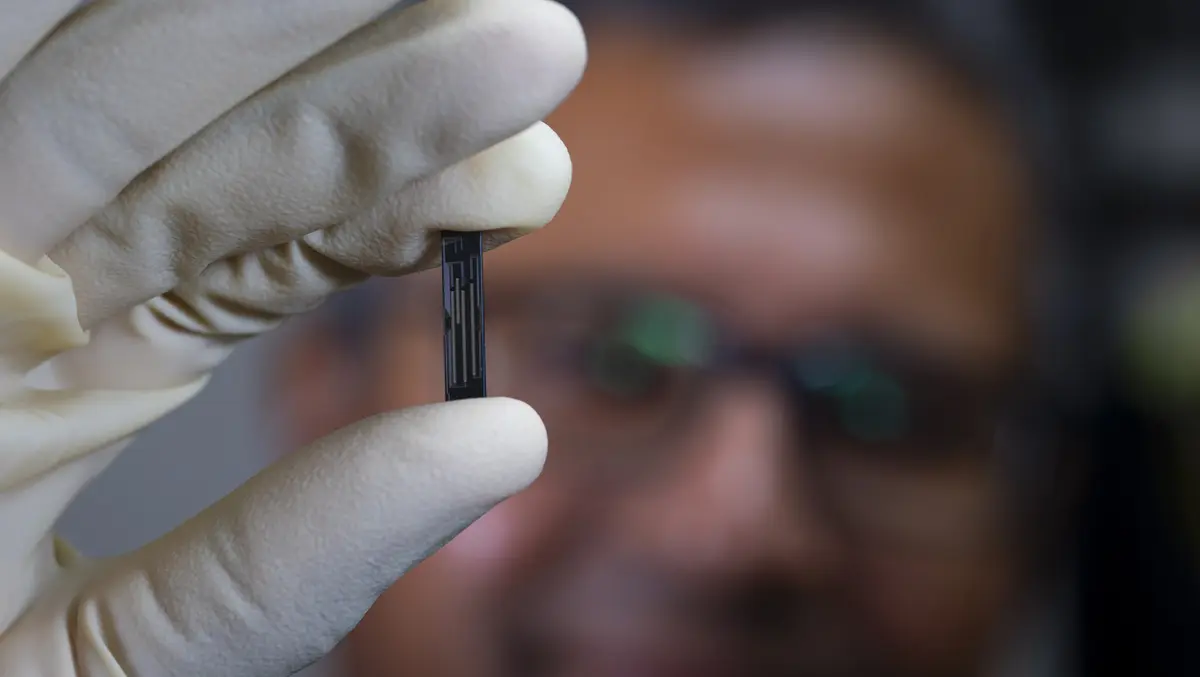
Cisco has introduced a universal quantum switch, a research prototype designed to connect quantum systems that use different encoding methods.
The technology aims to address a long-standing problem in quantum networking: quantum computers do not all encode information in the same way, and existing switches have generally been limited to a single encoding type.
According to Cisco, the system can accept quantum signals in different modalities, convert them into a form suitable for routing, and deliver them in the format required by the receiving system without destroying the underlying quantum information.
Cisco describes the product as a working research prototype rather than a commercial system. The design operates at room temperature and uses standard telecom frequencies over conventional fibre, rather than specialist cooling equipment or dedicated transmission infrastructure.
Technical barrier
Researchers and technology companies view quantum networking as one way to scale quantum computing beyond the limits of individual machines. Current quantum computers operate with far fewer qubits than many backers believe will be needed for broad industrial use, and networking has been proposed as a way to link multiple systems.
In that context, moving information between different types of quantum hardware has become a key technical hurdle. Cisco says its switch is designed to support major quantum encoding modalities, including polarization, time-bin, frequency-bin, and path.
So far, the prototype has been experimentally validated with polarization encoding. Support for time-bin and frequency-bin is built into the design, Cisco said, and remains part of its validation work.
At the core of the switch is a patented conversion engine that allows input and output modalities to differ. The approach is intended to let quantum devices from different manufacturers exchange information even if they were not originally designed to work together.
Test results
Proof-of-concept experiments used Cisco's own entanglement source and single-photon detectors. In those tests, the switch preserved quantum information with less than 4% degradation in quantum state fidelity and entanglement.
Cisco also reported electro-optic switching in as little as 1 nanosecond and power consumption below 1 milliwatt. The company presented those figures as evidence that the system can route and convert quantum information without undermining the coherence needed for a quantum network to function.
Detailed findings are expected to appear in a research paper on ArXiv.
Broader push
The launch is part of Cisco's broader effort to build a quantum networking stack spanning hardware, software, and applications. The switch sits alongside the company's entanglement chip, which generates the entangled photons used in quantum information transfer, and its network-aware quantum compiler, which distributes algorithms across multiple processors.
That work has been developed in Cisco's quantum labs in Santa Monica. Cisco also cited collaborations with IBM, Qunnect, and Atom Computing as part of its wider quantum networking programme.
Interoperability is central to the announcement. Cisco says the switch could help customers avoid being tied to a single supplier's approach by allowing different quantum systems to communicate across shared infrastructure.
Unlike much existing quantum hardware, which often depends on cryogenic cooling, the room-temperature design could lower practical barriers to deployment if the concept moves beyond the research stage. The use of standard telecom fibre could further ease integration by allowing experiments and eventual deployments to run over networks already used for conventional internet traffic.
Still, the technology remains at an early stage. Cisco's own description places the switch in the prototype category, and the company has disclosed experimental validation for only one encoding modality so far.
"Reaching this milestone is a pivotal moment for our quantum program and a testament to the transformative potential of quantum networking," said Vijoy Pandey, Senior Vice President and General Manager of Outshift, Cisco's Emerging Technologies and Incubation Group. "We've long recognized that connecting quantum systems is the key to achieving true scalability, and now we've taken a critical step toward making that vision a reality. While this is a significant achievement, it's just the beginning. The road ahead is long, yet the impact of what we are building-and what is still to come-will be nothing short of profound."