

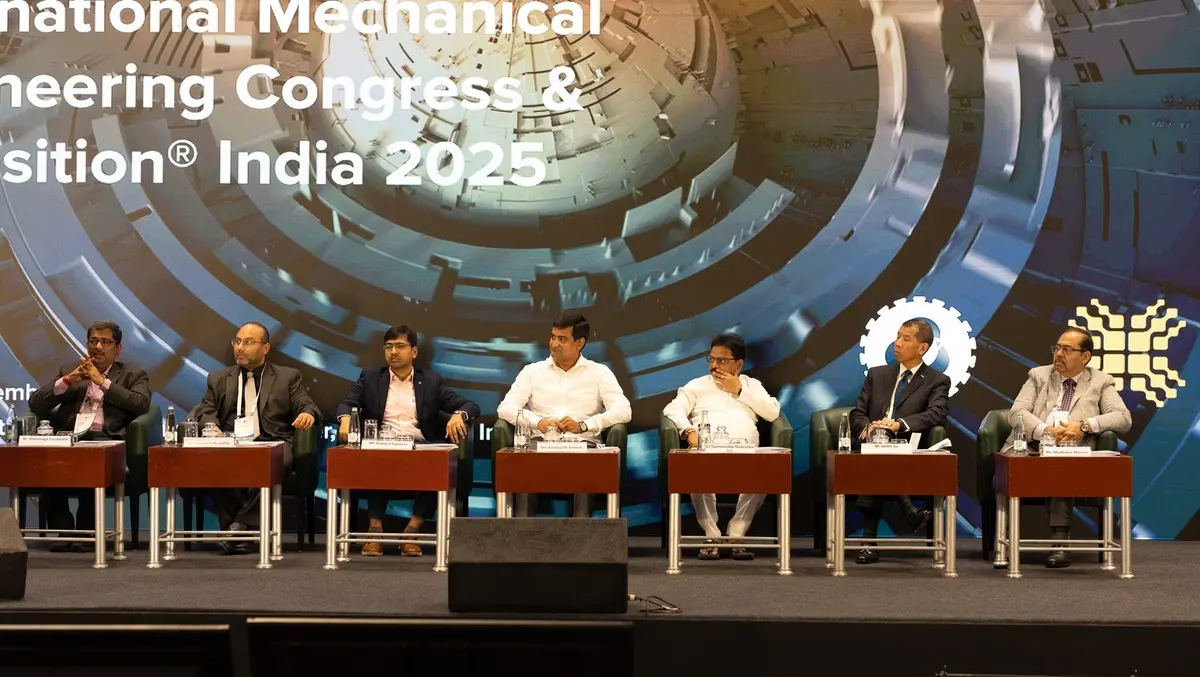
Hyderabad hosts IMECE India 2025 to drive innovation & growth
Thu, 18th Sep 2025
ASME's International Mechanical Engineering Congress & Exposition (IMECE) India 2025 brought together stakeholders from research, industry, and academia to discuss future directions in engineering with support from the Andhra Pradesh and Telangana governments.
The congress, held for the first time in Hyderabad, featured sessions focusing on sustainability, inclusive growth, technological skills, and collaboration. It provided a platform for mechanical engineers, policymakers, entrepreneurs, and academic leaders to discuss advancements and policy strategies aligned with India's ambitions in manufacturing, export, and innovation.
Government partnerships
A memorandum of understanding was signed between ASME and the ICT Academy of Kerala, outlining a collaborative approach in research, education, and advanced manufacturing. Government representatives from Andhra Pradesh and Telangana emphasised their states' contributions to innovation and industrial development.
Hon. Chief Guest Shri Srinivas Kondapalli, Minister, MSME, Government of Andhra Pradesh, stated, "I feel deeply honoured to be a part of ASME's IMECE India 2025. Andhra Pradesh, with its strong infrastructure, sectoral parks, and innovation hubs, is fast emerging as a hub for manufacturing, MSMEs, and exports - contributing nearly 8% to India's total exports. With forward-looking policies, investment-ready industrial nodes, and a focus on sustainability, the state is creating unprecedented opportunities for industries and startups alike."
"IMECE India perfectly complements this vision by enabling global collaborations, advancing engineering research, and strengthening academia–industry partnerships to reimagine India as an innovation-driven economy. Together, we are laying the foundation for a future where India leads the world in sustainable innovation and industrial growth."
Spotlight on MSMEs and startups
Throughout the congress, the focus remained on the role of India's micro, small and medium enterprises (MSMEs) and hardware-led startups. The MSME Conclave covered topics including supplier assessment, opportunities in aerospace and defence, and technology adoption. Session leaders addressed the importance of skill development and technology integration for MSMEs to participate in global supply chains.
Industry speakers highlighted the growing capabilities of Indian startups in deep tech. Pawan Kumar Chandana, Co-Founder of Skyroot Aerospace, said, "India is no longer just a consumer of advanced technologies - we are now building and exporting world-class deep tech to the globe. From defence to drones, biotech to quantum, and space to semiconductors, Indian startups are driving breakthroughs that will transform industries and societies. Skyroot is delighted to be a part of IMECE India 2025, and we look forward to such platforms providing India a global stage to showcase innovation."
Academia–industry collaboration
Efforts to connect Indian researchers and engineers with global communities were highlighted. Madhukar Sharma, President & Director of ASME India, said, "IMECE India 2025 marks a transformative moment for Indian engineers, researchers, and the wider technical community. By connecting them with global networks and fostering applied research through our Technical and Engineering Communities, covering areas like Additive Manufacturing & 3D Printing, Advanced Materials & Manufacturing Technologies, Advance in Thermal Technologies, Gas Turbines, Offshore Pipelines Transmission & Distribution System, Cyber Physical Systems + AI/ML, and Structures Structural Dynamics & Materials, we are enabling the development of more sustainable and innovative products."
Academic participation was further encouraged in sessions such as the Engineering Education Symposium, which discussed green engineering, product development startups, and the Make in India initiative. Dr. Shanmuga Sundaram, Congress Vice-Chair, commented, "The dream of every academician, presenting a paper at the world's largest gathering of mechanical engineers was once an aspiration reserved for those who could travel to the U.S. Today, that dream has become a reality. This unique opportunity invites researchers and academicians from around the globe to join the largest assembly of industry leaders, fostering collaboration and knowledge exchange. It's also a chance to explore how India's innovative approach to teaching, learning, and engineering products is contributing to the nation's journey toward self-reliance. This inaugural event promises to be an enriching experience, serving as a fertile ground for future collaborations and groundbreaking ideas."
Clean energy and sustainability
Sustainability featured prominently, with a plenary keynote on green hydrogen technology and its role in clean energy transition. India's pilot projects in green hydrogen and waste-to-energy were referenced, with discussions on regulatory frameworks, compliance certifications, and challenges such as cost and workforce development. The panel highlighted the need for industry, government, and academic collaboration to achieve national strategic goals in clean energy, including alignment with missions such as Atmanirbhar Bharat 2047 and the National Green Hydrogen Mission.
Lester K. Su, President of ASME, said, "We are deeply committed to partnering with India to support research and development, expand access to global engineering tools, and bridge academia and industry through platforms including IMECE India. We are particularly inspired by India's ambitious work in sustainability, from renewable energy integration to smart manufacturing and resilient infrastructure. These are the kinds of breakthroughs that will shape the next century, and India is already taking the lead."
State innovation strategies
The Government of Telangana outlined its policies and infrastructure support for technology and entrepreneurship. Shri Sanjay Kumar, IAS, Special Chief Secretary, Department of Information Technology, Electronics & Communications (ITE&C) and Department of Industries & Commerce, said, "The Departments of ITE&C and Industries & Commerce are driving Telangana's emergence as a hub for innovation, technology, and entrepreneurship. With progressive policies, robust infrastructure, and strong industry collaboration, we are creating an enabling ecosystem for startups, MSMEs, and global enterprises to thrive. Platforms like IMECE India 2025 not only showcase India's engineering and technological excellence but also reinforce Telangana's commitment to becoming a preferred destination for investment and innovation".
Women in engineering
Women's participation in mechanical engineering was addressed in the session, "Turning the Gears: Women Shaping the Future of Mechanical Engineering". Senior leaders from national and international organisations participated in discussions about career advancement, innovation, and the expanding impact of women in the sector.
Technology and skills workshops
Practical workshops and masterclasses took place on subjects including AI for robotics autonomy, digital twin technology, and intellectual property rights. Hands-on technology sessions and career connect initiatives were designed to foster skills relevant to the evolving demands of the engineering workforce.
Student engagement also featured, with hackathon competitions and awards for university teams, furthering the objective of bridging academic learning with industry requirements.
IMECE India 2025 organisers highlighted diverse tracks such as semiconductors, clean energy, cyber-physical systems, aerospace, and AI/ML, aligning with India's policy to pivot from a service-driven to an innovation-driven economy.