


Enterprise software has long been good at recording what happened and rather less good at doing anything about it. Oracle reckons that is changing, and at the opening keynote of Oracle AI World it put agents on stage to prove it, from a shipping dock to an HR help desk to a Burger King kitchen.
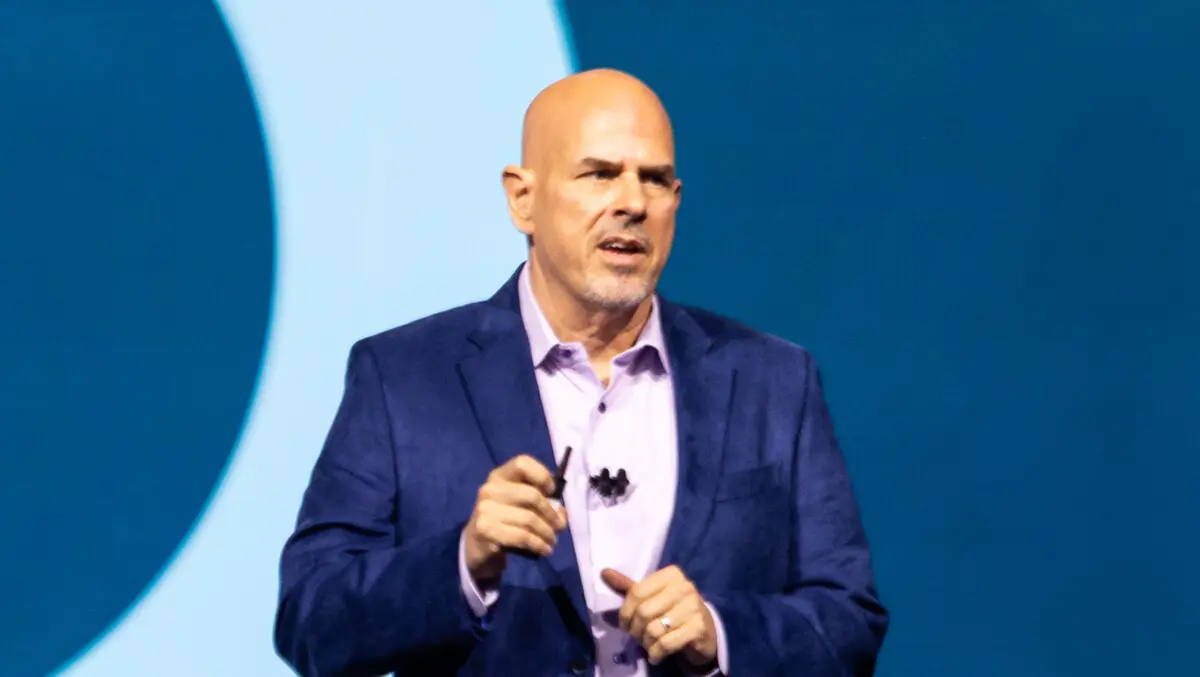
That was the pitch from Oracle CEO Mike Sicilia. "AI is no longer limited to telling you what's happening in your business. It actually is now telling you what can happen next," he said. "Work is sometimes organised around the software itself. People need to know which application to open, where to find the information, steps to follow, and who needs to do what next."
No small thing, then, that Oracle NetSuite's latest release, teased for some time, is named NetSuite Next.
The fix, Sicilia said, is software you barely notice. "In fact, AI should allow you to barely think about the software." An interesting ambition, perhaps, for a company that has spent decades selling quite a lot of it. Invisibility is also something we've long desired from other utility services, like internet connectivity, water and power. Making ERP so inconsequential that what it really is becomes an afterthought if that, certainly has its appeal.
AI with receipts
Oracle executive vice president of applications development Chris Leone started on a mock shipping dock. "So that's an agentic application. It's defined around an outcome. It moves work forward," Leone said.
Harder jobs go to Fusion Claw. "When we need to do specialist work, like what a financial analyst might do or a supply chain planner, we need to bring out a governed agentic runtime that we actually call [Fusion Claw]," he explained. In the demo, it lifted truck utilisation from 61% to 88%, with a notional US$58,000 saving.
Autonomy comes on a leash, addressing probably the biggest and likely to be the most enduring of the challenges facing if not AI, then its adoption. "We have a governance layer, so it knows when it hits limits, and it's going to stop and say, 'Hey, these are five loads I need you to take a look at,'" Leone said.
Give the go ahead, and it gets on with it. "It doesn't just recommend you should do it. It actually does it. It does the work, and that's the difference."
Each run ends with what Oracle calls an 'Outcome Receipt'. "So this is AI with receipts…I made that up," Leone quipped. The point, though, is the audit trail: "It records who did the work, what actions were taken, and when."
Fusion Companion is an intelligent layer across Fusion, reachable through a ChatGPT plugin or a new, voice-first Fusion Agentic Home. "You just simply describe what work you want to get done," Leone said. Oracle now has 75 packaged agentic applications, with 25 Fusion Claw-powered.
The open source Fusion Setup and Configuration Registry, machine-readable AI skills on GitHub, aims to automate implementation. "Agents will be the operator, and the registry will be the authority, and that's the future of how software will be implemented," Leone said. Systems integrators, take note.
Sometimes working with HR requires work
US connectivity company Spectrum runs HR for roughly 100,000 people on Oracle HCM, and its vice president of HR technology Derek Dreyfus has built 'AskHR' agents on top. "Well, sometimes working with HR requires work," he said. "The majority of our employees are not on the computer; they're technicians on a truck. They are reps in the store or customer service talking to the customer on the phone."
A demo followed store rep Maria, whose daughter is in hospital, as she requested time off from her phone in one tap. Days later, an agent flagged her leave eligibility to HR, unprompted.
Dreyfus said Spectrum approached governance "as an accelerator versus a blocker." The dividing line is clear. "If the response can be repeatable, governed, we let AI take care of it. If it's requiring a pay change or an exception to a process… we keep that," he said.
"I have a team that analyses every question that comes in every single day across all of our agents," Dreyfus said, watching accuracy and sentiment. Questions began with "When am I getting paid next?" and moved on to "Why do my deductions change from paycheck to paycheck?" "Now it's how fast can we get this," he added.
Sicilia talked of giving people more time to be human. What they do with it is another matter: Gartner research released the same day found only 21% of time freed up by AI was redirected into more innovative work. We're human, after all, and sometimes free time is best spent outside, so long as our work is taken care of.
Have it your way
Oracle executive vice president of industry applications Simon de Montfort Walker turned to restaurants. "Restaurants are incredibly fast-paced and incredibly multi-channel. There's a ton of data flowing through the front of house, to the back of house," he said.
His example: an item sells out, is restocked, but stays marked unavailable.
At Burger King Italia, Oracle sent in engineers. "We put a group of forward deployed engineers on the ground who worked with their business leaders, their restaurant managers, the district managers," de Montfort Walker said.
In a district manager demo, the AI traced failed orders across several stores to one missing configuration and fixed them all at once.
Could there be a fly in the ointment? Gartner expects over 40% of agentic AI projects to be cancelled by the end of 2027, due to escalating costs, unclear business value or inadequate risk controls.
Oracle's answer is governance and receipts, which at least addresses the right problem; Sicilia put it this way: "Bring us the problems you've learned to live with."
Because, increasingly, applied agentic AI demonstrably solves problems previously considered intractable.